What Math Can This Help Me Learn or Teach?
Frectangles is designed to encourage students to recognize equivalent expressions visually through rectangles. Two rectangles with equal areas can be written as two equivalent expressions although in the game they are only shown visually. Each level gives players a set of rectangular puzzle pieces and a game board to place those pieces. As the levels progress, more and more mathematical transformations are required to turn the pieces they have into the pieces they need to fill board. Students can experience these mathematical transformations visually in the game, and can then build on these experiences formally and algebraically with a teacher.
Mathematical Tools & Connections
Rotate
3 × 5 = 5 × 3
Double & Halve
4 × (2 × 3) = (4 × 2) × 3
Cut
3(2 + 3) = 3(2) + 3(3)
Combine
3(2) + 3(3) = 3(2 + 3)
The Current Challenge
In the current version of Frectangles, students will likely approach the puzzles through visual estimation, eyeballing side lengths to determine which pieces might fit where. While they may recognize that the "double width, halve height" tool creates shorter, longer rectangles, they probably won't realize the underlying mathematical transformation.
This presents a common educational challenge: students might randomly try all of the available tools until something works, missing opportunities to engage with the mathematical concepts that make each transformation meaningful.
Planned Features to Encourage Mathematical Thinking
I'm developing two key features to promote more intentional mathematical reasoning:
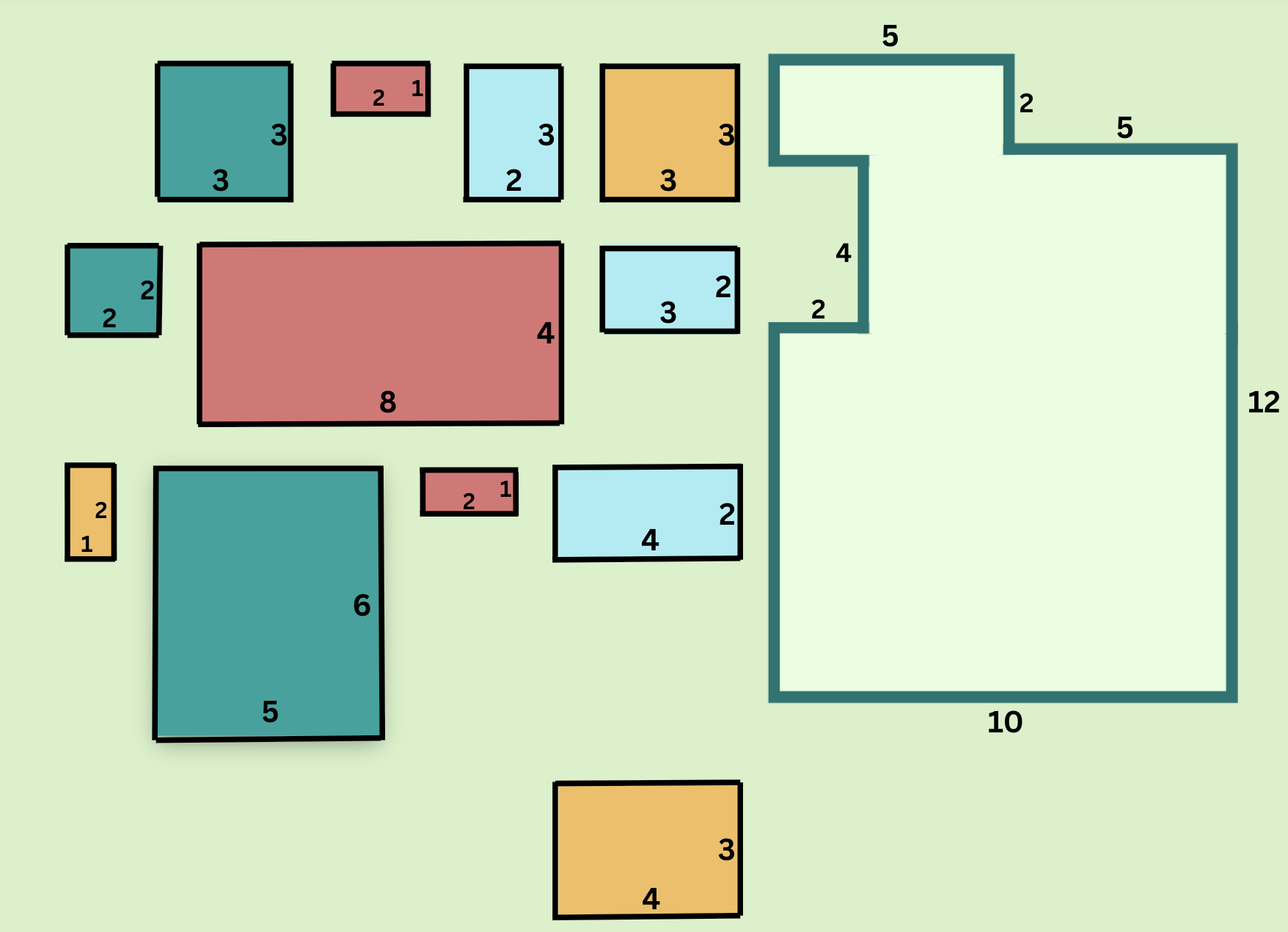
Grid Removal & Side Length Labels
By making the grid invisible on most levels and displaying numerical side lengths instead, students will need to engage in mental math to decide which tools to use. For example, they'll need to calculate whether doubling a width of 4 will actually produce the dimensions they need, rather than relying purely on visual estimation.
Strategic Tool Limitations
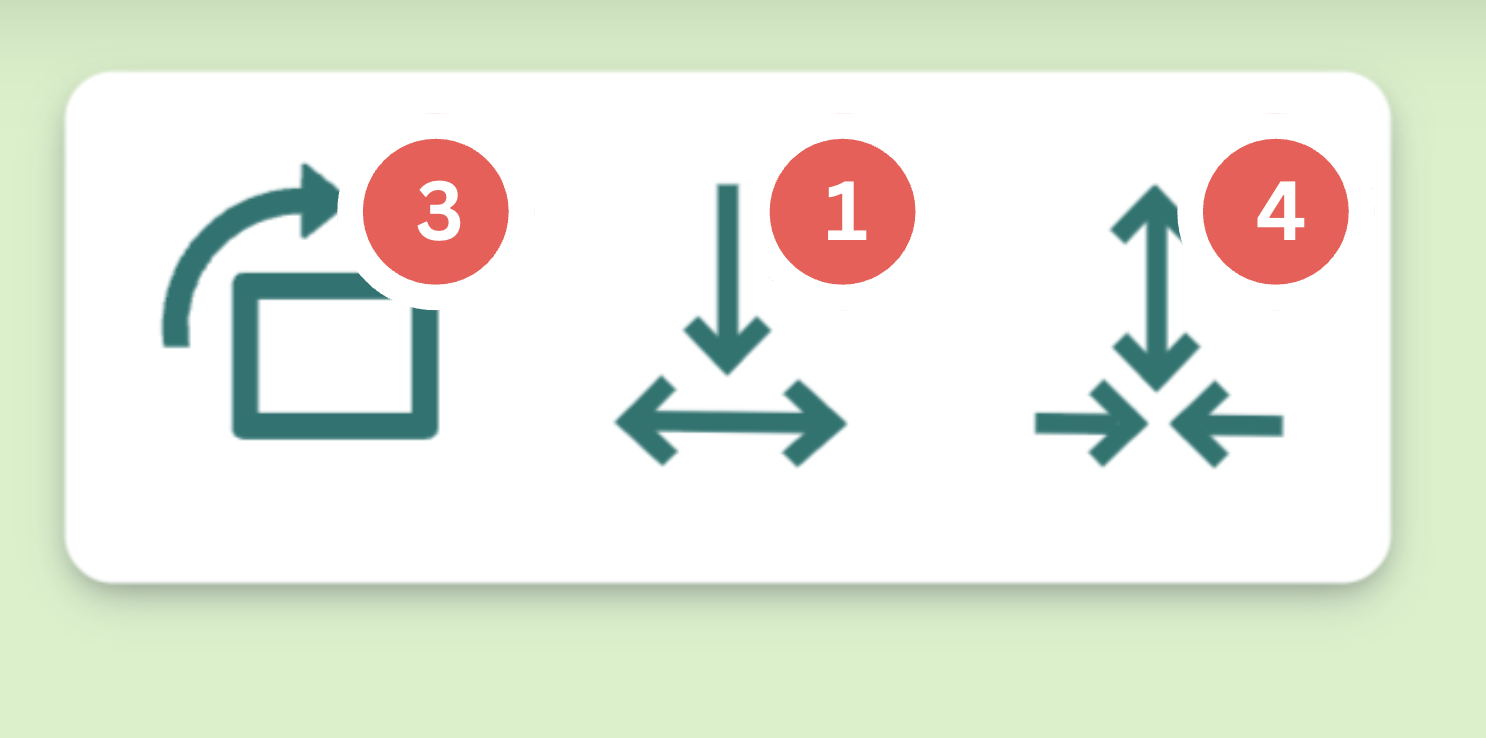
Implementing constraints on tool usage will encourage students to predict the mathematical effects of each transformation before trying them. This will create an incentive for strategic thinking and help prevent the random trial-and-error approach that bypasses mathematical reasoning. I'm thinking of using icons similar to notifications to show how many uses of each tool are remaining.
Next Steps: Testing & Iteration
Once these features are implemented, I will do user testing with actual students to ensure an each level provides adequate challenge but is still accessible and encouraging. This user-centered approach will help determine the optimal level progression, action constraints that promote mathematical thinking while maintaining student enjoyment.
The goal is a game that allows students to develop stronger intuition about equivalent expressions and properties of operations over time. With the support and guidance of a teacher, these experiences in the game can be built upon more formally with numeric and algebraic representations.